2014-2018
PREPARING COMMUNITIES FOR DISTASTERS
©UNICEF / Jerry Liu
2014-2018
Unicef
UNICEF works across more than 190 countries and territories to save children’s lives, defend their rights and help them fulfil their potential, from early childhood through to adolescence. We funded UNICEF in India to support government teachers’ capacity, in Madagascar and China to prepare communities for natural hazards, and in the Philippines to provide clean water and safe sanitation in the wake of Typhoon Haiyan.
CHALLENGE
© UNICEF/ Zhoa Jia
ACTION
Education can play a critical role in preparing for natural hazards, ensuring that knowledge and appropriate safety behaviour are deeply embedded within communities.
MADAGASCAR
UNICEF provided regional authorities, teachers and students in 16 high-risk regions of north Madagascar with the knowledge of steps to take at school and home before, during and after a natural hazard strikes.
Combining humanitarian relief with long-term awareness goals, UNICEF helped increase resilience. Over 2,300 teacher trainers have trained 25,000 teachers on disaster preparation and risk management, including lessons and exercises on how to get ready for, and what to do when, a natural hazard is announced.
CHINA
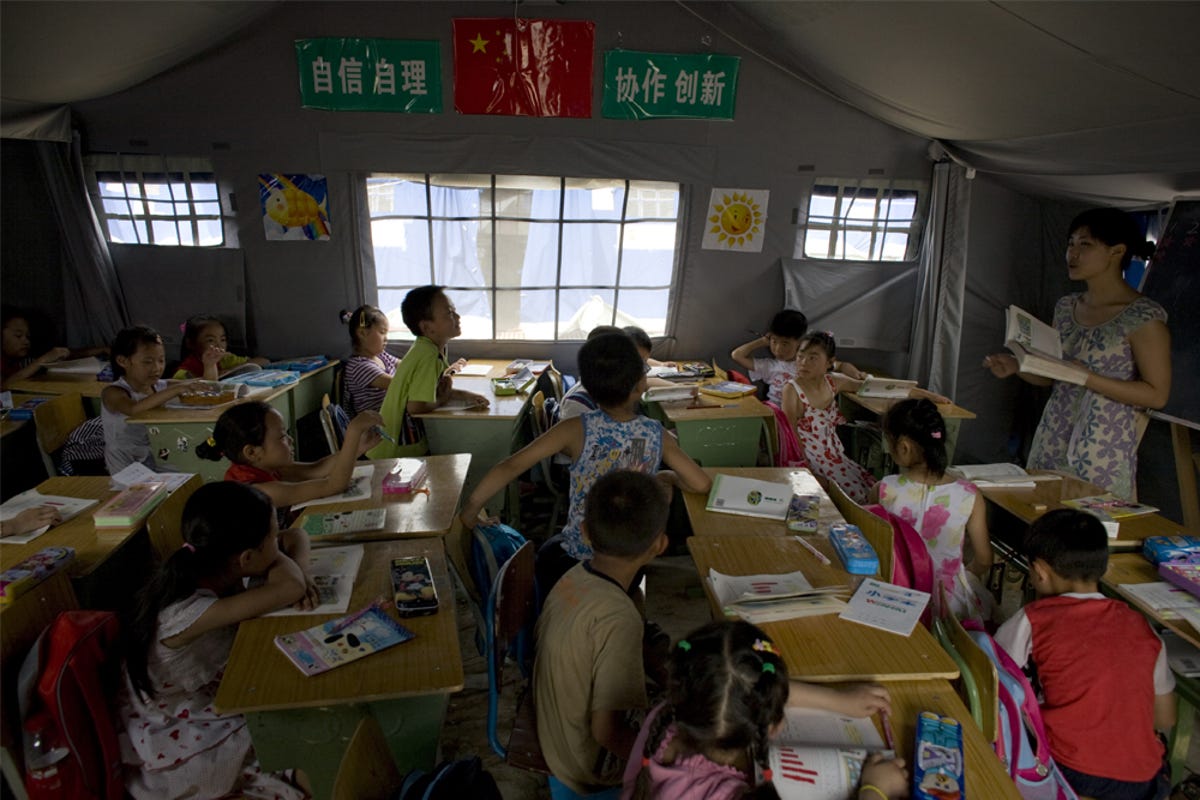
UNICEF worked in three disaster-vulnerable counties in Western China – Anzou District, Lushan and Shifang – to strengthen the capacity of the communities, particularly schools and health facilities, to withstand, respond to and recover from natural disasters. UNICEF also worked with local, provincial and national authorities to improve coordination across different sectors to deliver life-saving assistance when and where needed.
A provincial-level resource centre was set up in Chengdu in 2016 to provide advanced training to key frontline workers and over 200 local government staff.
Communication materials on disaster risk reduction were developed and disseminated, including a safe school manual and an online video which attracted over 1 million views.
IMPACT
UNICEF worked closely with the governments in Madagascar and China to help minimise the impact of disasters on vulnerable communities and strengthen their capacity to prepare for future natural hazards.
MALAGASY STUDENTS GAINED KNOWLEDGE
on how to prepare for and respond to natural disasters
MALAGASY TEACHERS TRAINED
by over 2,300 teacher trainers on disaster preparation and risk management
CHILDREN IN WEST CHINA
learned how to respond to an emergency, through over 100 themed activities
PARENTS, TEACHERS, HEALTH WORKERS AND GOVERNMENT OFFICIALS
practised real-life simulations, evacuation drills and role plays